The yoga industry has a quiet problem: we mint thousands of teachers every year from our industry's 200-hour programmes.
Even in India, the way of the Gurukul and the Guru-shishya Parampara has long given way to western standards. An established Yoga Certification Board was created in 2015 with levels from Protocol Instructor to Yoga Master. Though longer and more immersive than most, it remains a certification model with all the difficulties that come along with it.
Certification made yoga teaching accessible. It created standards where there was none—a baseline of safety, anatomy, ethics. It democratized what was once gated knowledge.
But certification optimizes for graduation — not what comes after.
Most certified teachers never teach. They finish the course, receive their certificate, take a photo with their cohort, and then nothing. No pathway. No support. Left to figure it out alone, competing for studio slots against thousands of others just like them. I didn't want that for my students.
Most yoga studios are collections of freelance teachers, each with their own style and approach. That variety can be valuable. But it also means every class is a different experience. I didn't want that for my school.
So I built something different: a pathway that connected students with teaching within an ecosystem of support. In return, it provided the consistency and alignment with our school's values of inclusivity and heart-centred service.
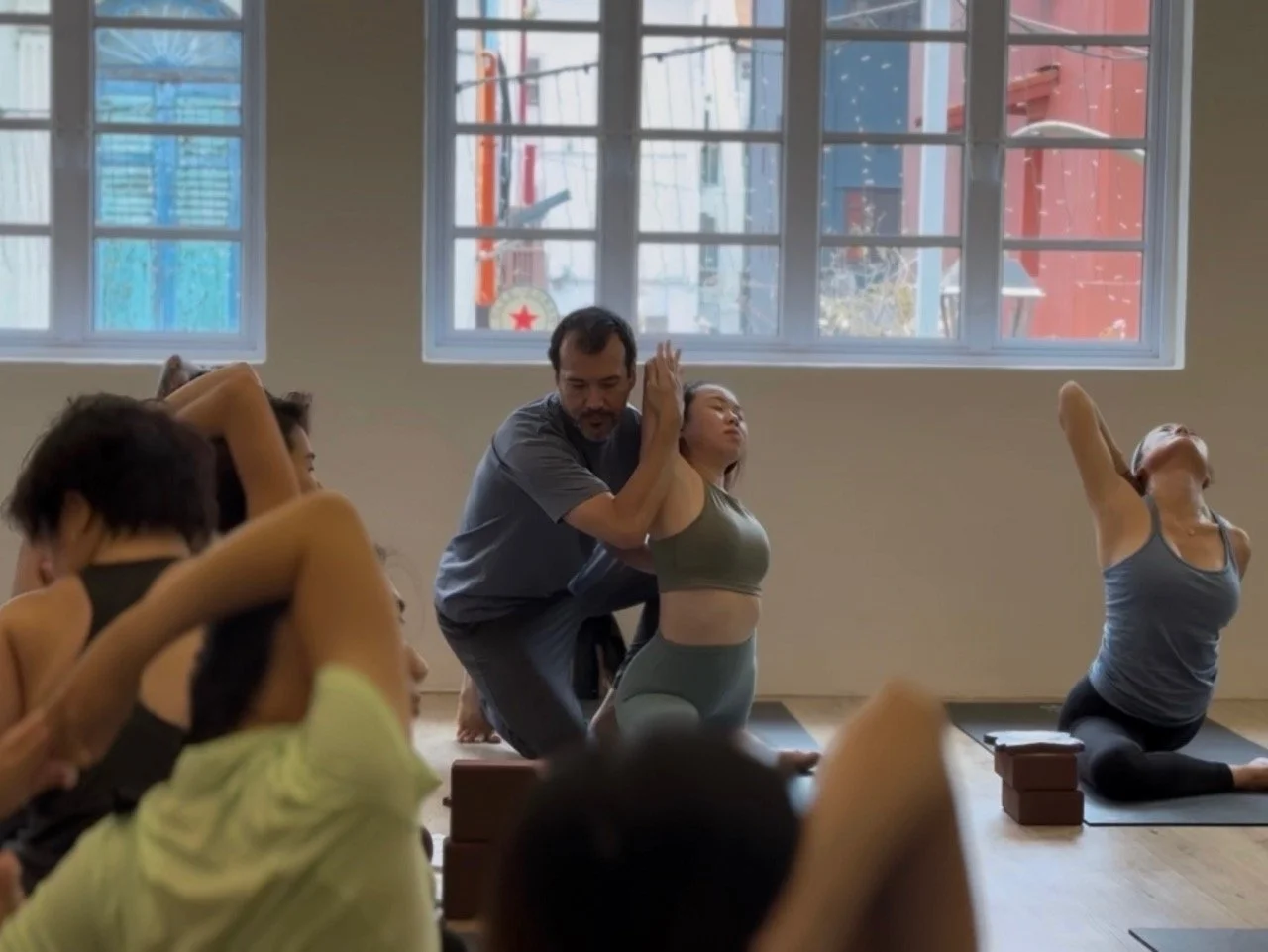
In Nithya Priyan School of Yoga, our 200-Hour Teacher Training Course caps at twelve per batch—not because it's profitable, it isn't—but because I need to actually know each person. Relationship takes time and proximity. You can't build it in a lecture hall of thirty.
But here's the thing: 200 hours isn't enough. It's barely enough to start. So graduation isn't the end. Graduates who want to teach apply to our Term Teacher Programme, where they lead real classes under guidance, making mistakes, adjusting, learning what no curriculum can teach—how to read a room, how to hold space, how a well-timed pause matters more than a perfect cue.
The ones who grow through that process join our teaching team. By then, I've watched them for months, sometimes years, counting their time on the mat as students. And then they teach the next batch of students. Students become teachers become mentors. It's not a pipeline—it's a cycle of care. A mutually supportive community of like-minded yogis practising together, finding joy in the body and peace in the heart.
Every month, CVs land in my inbox from yoga teachers around the world—impressive credentials, beautiful backbends, years of dedicated study. I look at them, genuinely impressed by the work they represent, and then I close the email.
Because I only hire my own graduates.
When those CVs arrive, I'm not dismissing the work behind them. I'm acknowledging a simple truth: I can't know someone from a document. The teachers I trust are the ones I've seen become teachers. Slowly. Over time. In relationship.
Krishnamacharya didn't hire from CVs either. His students studied with him for decades. That model doesn't scale, and I'm not pretending to replicate it. But something of it survives in the choice to grow teachers rather than recruit them.
The inbox keeps filling. I keep closing the emails. And when I need a new teacher, I look at my Term Teacher cohort. I already know who they are.
Join the next batch of twelve and learn more about our school’s Teacher Training Course Curriculum here.