Count your calories. Cut the carbs. Move more. Try harder. And when it doesn't work? Blame yourself.
The diet industry has it backwards. Here's the truth: you're not broken. Your nervous system is under siege.
The Real Problem
Your nervous system has two modes. One revs you up — your fight-or-flight response. The other calms you down — your rest-and-digest mode. They're meant to take turns. You face a threat, your body fires up. The threat passes, you settle back down.
Work pressure. Financial stress. Notifications that never stop. Traffic. Deadlines. The constant hum of not enough time, not enough money, not enough you. Your body doesn't know the difference between a tiger and a toxic work environment. It responds the same way: cortisol floods the system, blood sugar spikes, your heart rate climbs, digestion slows, and your body braces for danger.
Except the danger never passes. There's no off switch. Your fight-or-flight response gets stuck in the "on" position — not for minutes, but for months. Years.
And that's when the real damage begins.
The Domino Chain
When your stress response stays chronically activated, it triggers a cascade that makes weight loss nearly impossible:
Your blood sugar stays elevated → Cortisol keeps pumping glucose into your bloodstream for an emergency that never arrives. With nowhere to go, your body stores it as fat — specifically around the belly.
A Yale study found that even lean women with high stress responses accumulated significantly more abdominal fat, driven by elevated cortisol [1]. This isn't random: visceral fat tissue has a higher density of cortisol receptors than fat elsewhere in the body, so that's exactly where the storage gets directed [2].
Your sleep gets wrecked → A system stuck in overdrive doesn't wind down easily at night. And poor sleep makes everything worse.
A landmark University of Chicago study found that just two nights of restricted sleep caused an 18% drop in leptin (your "I'm full" signal) and a 28% spike in ghrelin (the "I'm starving" hormone) — along with a 24% increase in appetite, especially for sugary, starchy foods [3].
A larger study of over 1,000 adults confirmed the pattern: short sleepers consistently showed lower leptin and higher ghrelin levels, independent of body weight [4].
Fatigue sets in → You're exhausted but wired. You stop moving. Not because you're lazy — because your body is running on fumes. You sit more. Walk less. The couch wins.
Mood drops → Comfort eating kicks in. And this isn't just emotional — cortisol enhances the reward value of high-calorie food through neurochemical pathways, making comfort eating a biological drive, not a character flaw [2]. Then guilt follows. And guilt? That's more stress. More cortisol.
The cycle feeds itself.
You Don't Need Another Diet
You just need to break the stress cycle.
No meal plan will fix a nervous system stuck in overdrive. No HIIT workout will out-train chronic cortisol — in fact, a 2025 network meta-analysis found that high-intensity interval training can actually increase cortisol levels [5]. You have to address the root: downregulate the nervous system first. When your body feels safe again, it lets go. Of tension. Of inflammation. Of weight.
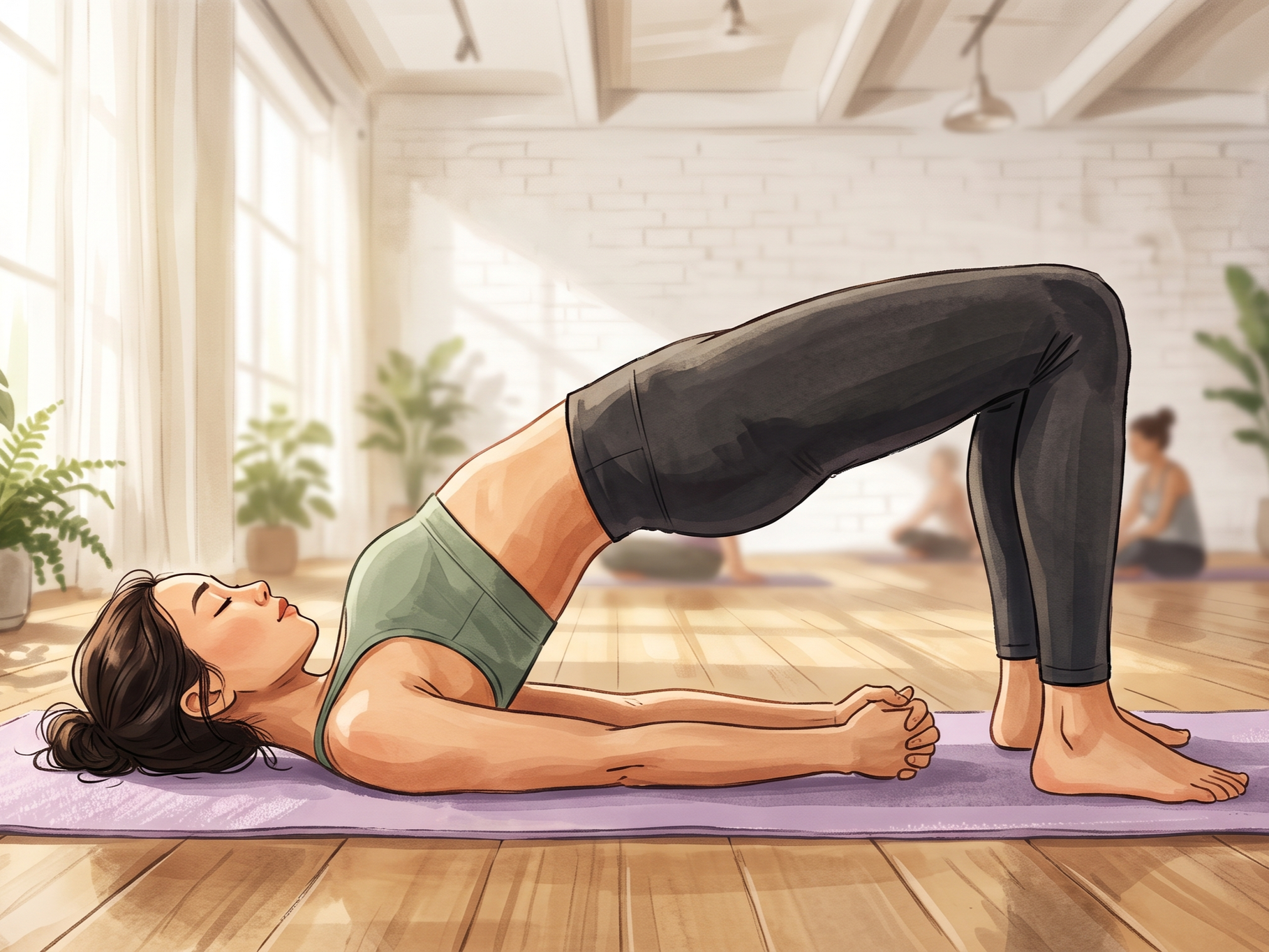
This, by the way, is what a real yoga practice does.
Not burn 300 calories in a hot room. Not twist yourself into shapes for Instagram. A real practice teaches your nervous system the ‘off’ switch. That same meta-analysis — analysing 44 randomised controlled trials — found that yoga produced the greatest cortisol reduction of any exercise modality tested, outperforming aerobic exercise, qigong, and multicomponent programs [5]. A separate meta-analysis of 42 trials confirmed that yoga practices reduced evening cortisol, waking cortisol, resting heart rate, and blood pressure compared to active controls [6].
Breathing slows. Cortisol drops. Sleep improves. Energy returns. And when the system resets — the body follows.
Weight loss isn't a food problem. It's a stress problem wearing a food costume.
Want to learn Yoga the right way? Twice a year I conduct a Yoga Foundations Course designed to lead you step by step into building the pillars of a Mindful and Sustainable practice that will serve you till a ripe old age. The next course starts April 4th. Find out more here.
Priyan is the founder of Nithya Priyan School of Yoga in Singapore. He teaches yoga that puts your nervous system first — because everything else follows from there.
References
Epel, E. S., McEwen, B., Seeman, T., et al. (2000). Stress and body shape: Stress-induced cortisol secretion is consistently greater among women with central fat. Psychosomatic Medicine, 62(5), 623–632.
Björntorp, P. (2001). Do stress reactions cause abdominal obesity and comorbidities? Obesity Reviews, 2(2), 73–86. See also: Dallman, M. F., et al. (2003). Chronic stress and body composition. Brain, Behavior, and Immunity, 17(4), 394–398.
Spiegel, K., Tasali, E., Penev, P., & Van Cauter, E. (2004). Brief communication: Sleep curtailment in healthy young men is associated with decreased leptin levels, elevated ghrelin levels, and increased hunger and appetite. Annals of Internal Medicine, 141(11), 846–850.
Taheri, S., Lin, L., Austin, D., Young, T., & Mignot, E. (2004). Short sleep duration is associated with reduced leptin, elevated ghrelin, and increased body mass index. PLoS Medicine, 1(3), e62.
Chen, Y., et al. (2025). The optimal exercise modality and dose for cortisol reduction in psychological distress: A systematic review and network meta-analysis. Sports, 13(12), 415.
Pascoe, M. C., Thompson, D. R., & Ski, C. F. (2017). Yoga, mindfulness-based stress reduction and stress-related physiological measures: A meta-analysis. Psychoneuroendocrinology, 86, 152–168.