A beginner is not someone who knows nothing. It's someone who is willing to begin again—and in so doing, discovers that they can still be surprised. There is a childlike wonderment in this, a way of seeing the world as though for the first time.
You can access it by allowing yourself the opportunity to learn something new and unfamiliar. But it can just as easily be found in your long-time practice, in that quiet moment when you recognise that you've been moving through familiar forms without really meeting them.
In Zen, this quality is often called beginner's mind. Shunryu Suzuki describes the state of Shoshin as a mind with many possibilities—before experience hardens into certainty. His book Zen Mind, Beginner's Mind remains one of the clearest invitations to approach life with openness, humility, and freshness.
His thoughts have echoes across many traditions:
Tathatā / suchness — Buddhist practice of seeing things "just as they are," before mentally labelling them.
Bare attention — Vipassanā: noticing experience without immediately judging, grasping, or resisting it.
Pu, the "uncarved block" — Taoism: natural simplicity before conditioning and over-complication.
Phenomenological epoché — Husserl's practice of "bracketing" assumptions to encounter experience freshly.
Sākṣī, the witness — Vedānta: awareness that observes thoughts without being identified with them.
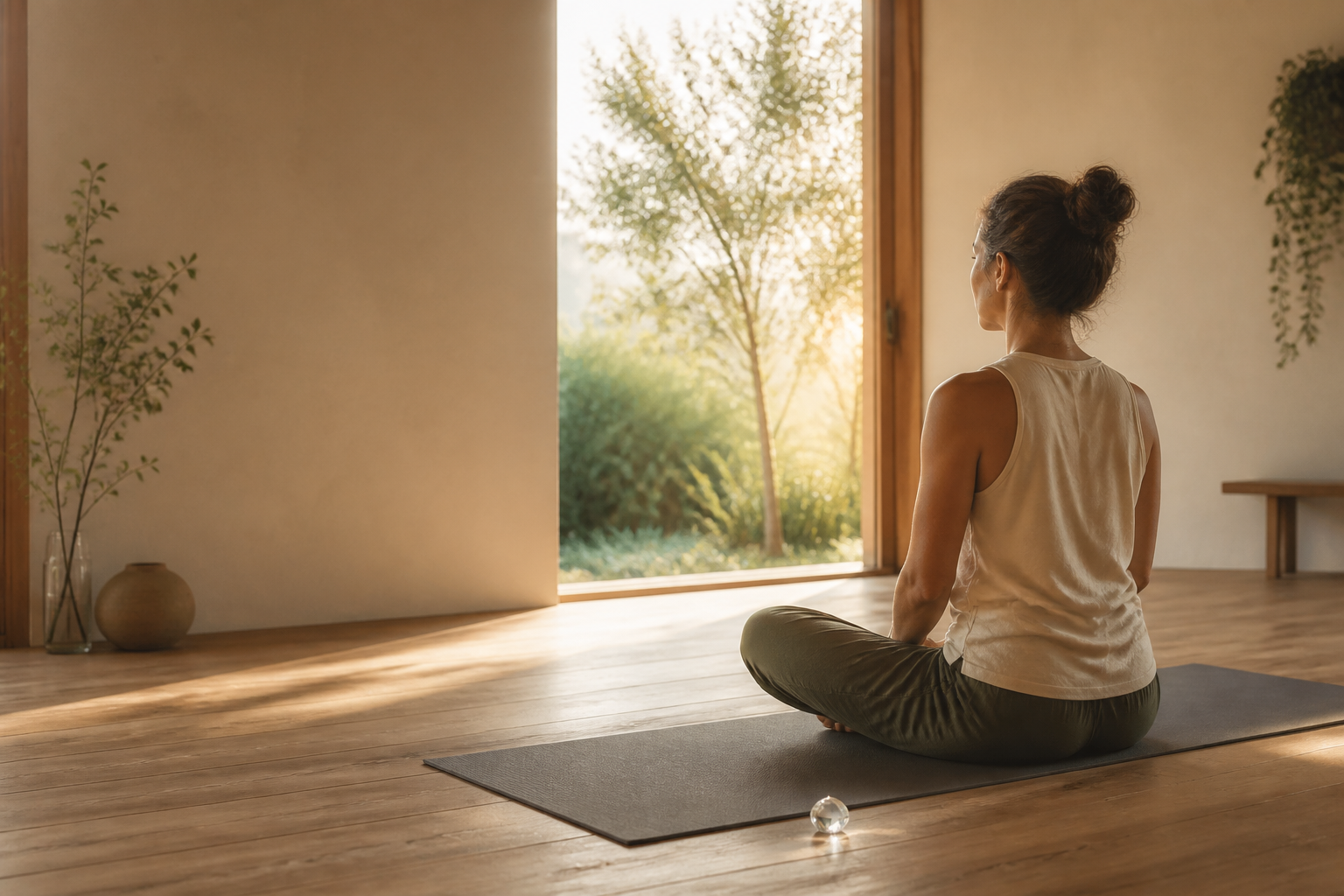
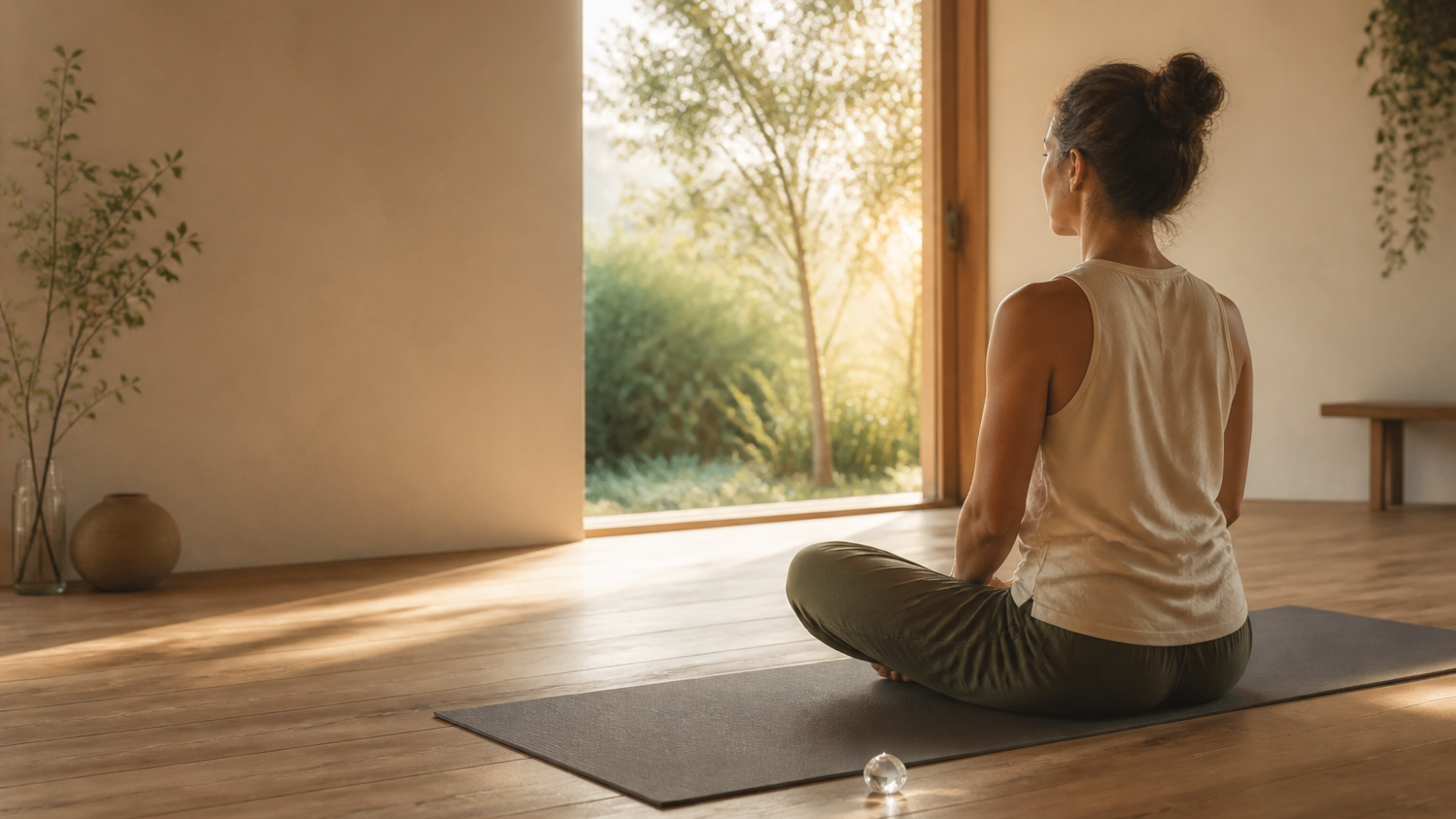
And in Yoga, Patañjali offers a closely related image. When the fluctuations of the mind have quietened, he says, the mind becomes like a transparent crystal—able to reflect what is before it without imposing its own colour. (YS 1.41)
So often, our greatest obstacle is not a lack of knowledge. It is the belief that what we already know is enough. This is how knowledge quietly becomes clutter, and a lifetime of growth becomes baggage we carry without realising.
To step aside, then, simply means loosening your grip on that version of yourself—making a little room for life to meet you honestly.
Yoga is not only a collection of shapes the body learns to perform. It is an invitation to become more intimate with the whole of your experience, on and off the mat. Its philosophy asks you to look carefully at the movements of the mind, the patterns of attachment and aversion, and the possibility of finding greater steadiness, clarity, and freedom.
Sometimes. the most meaningful next step is not the one ahead. Step aside—and begin again.
This is the spirit behind Yoga Foundations – The Beginner's Framework for an Integral Practice: a three-weekend intensive for all yogis—beginners, and beginners at heart.
Three Weekends To Start Again
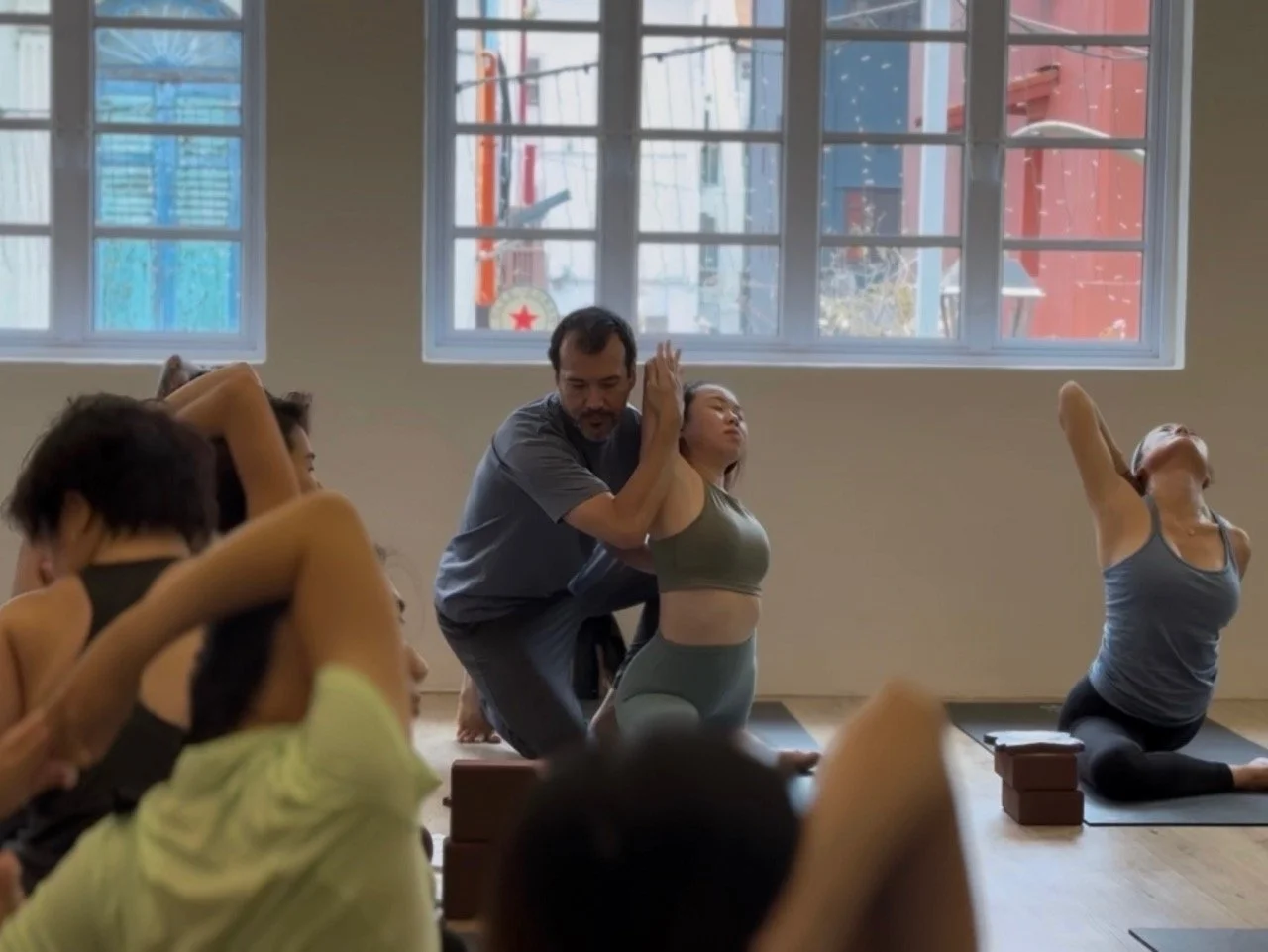
Together, we'll return to the foundations and explore yoga as the comprehensive path it was always intended to be. We'll draw from the principles of Patañjali's Yoga Sūtras and ground them in lived practice: the body, the breath, attention, meditation, ethics, nutrition, and the heart of why we practise.
Whatever your level of experience, you are welcome to come with curiosity, with questions, with uncertainty—letting the guidance come from that quiet feeling that it is time to look again.
Sign up for our upcoming Yoga Foundations Course here.